
Tallahassee’s canopy roads, shaded by oak branches that arch completely over streets like Old St. Augustine Road, give the city a distinctive character that sets it apart from much of Florida. That same lush, tree covered landscape comes with genuine humidity for most of the year and a storm season that brings both heavy rain and the kind of falling debris that canopy roads are especially prone to during high winds. Between these two seasonal realities, battery health and tire condition deserve particular attention for Tallahassee drivers looking to avoid trouble before it starts.
Why Humidity Targets Your Battery More Than Most Drivers Realize
Extreme heat accelerates the internal chemical breakdown that shortens a battery’s usable life, and Tallahassee’s combination of intense heat and heavy humidity for much of the year can be tougher on batteries than dry heat alone, since humid air conducts heat away from components differently than dry air does. A battery that seems to perform fine through spring can reveal accumulated summer heat and humidity damage the moment conditions shift, sometimes failing with very little warning once the demand of storm season arrives on top of an already weakened battery.
Corrosion on battery terminals is a related concern worth checking alongside overall battery performance, since Tallahassee’s humidity accelerates this kind of corrosion buildup more than a drier climate would. A quick visual check for a white or greenish buildup around the terminals, and cleaning it off when present, can resolve what looks like a weak battery without necessarily requiring a full replacement, though it is still worth having the battery’s actual capacity tested rather than assuming clean terminals alone solved the underlying issue.
Testing battery health proactively, rather than waiting for a slow crank, matters considerably in Tallahassee given how quickly conditions can shift from a routine humid afternoon to genuine storm activity requiring a reliable vehicle. If you have already experienced a starting failure, our guide on the top 10 reasons your car won’t start and how to get back on the road covers a range of causes worth understanding regardless of the season.
Why Tires Face A Specific Set Of Challenges Here
Tallahassee’s canopy roads and generally hillier terrain compared to much of Florida create driving conditions that put tires through more than a flat, open highway commute would. Fallen acorns, small branches, and general debris from the extensive tree cover are a near constant presence on many local roads, and this debris increases the chance of a small puncture or embedded object that a driver might not notice immediately but which can lead to a slow leak over time.
Storm season adds its own tire related concerns, since sudden heavy rain can create standing water on local roads faster than drainage can keep up, and worn tread considerably increases hydroplaning risk during these events. Checking tread depth and tire pressure regularly, particularly heading into and throughout storm season, gives you a much better margin of safety when heavy rain arrives with little warning.
It is also worth checking your spare tire during this same routine, since a spare that has quietly lost pressure over months of neglect is not something you want to discover for the first time after picking up a puncture from storm debris on a shaded canopy road. A few minutes spent confirming the spare is properly inflated and in usable condition is a small step that pays off considerably if you ever actually need it during a storm related tire emergency.
How Fallen Debris From Storms Specifically Affects Tires
Beyond routine debris from Tallahassee’s canopy roads, actual storm events can bring down larger branches and debris that pose a more significant risk to tires and undercarriage components. Driving cautiously in the aftermath of a significant storm, watching for debris that may not be immediately obvious, particularly on shaded canopy roads where visibility can already be more limited, helps avoid the kind of sudden tire damage that storm debris commonly causes.
Why This Combination Deserves A Proactive Approach
Both battery and tire issues share a common trait in Tallahassee’s climate, they tend to develop gradually and then reveal themselves suddenly once conditions become demanding enough to expose the weakness. A battery that has been quietly degrading through months of heat and humidity, or a tire that has been slowly losing air from a small puncture picked up on a debris covered canopy road, can both fail at exactly the moment storm season adds extra demand, which is precisely why proactive checks matter more here than a purely reactive approach to maintenance.
This pattern is part of what makes Tallahassee’s climate deceptively demanding compared to how it might feel on any given ordinary day. Long stretches of manageable, if humid, weather can lull drivers into skipping proactive checks, right up until an active storm arrives and asks more of the vehicle than it has had to handle in months. Building these checks into a routine rather than a reaction helps close that gap before it becomes a problem.
Building A Simple Seasonal Routine
Testing battery health each spring before the heaviest heat and humidity set in, checking tire pressure and tread regularly throughout the year given the debris common on Tallahassee’s roads, and giving both systems an additional check specifically heading into storm season are all reasonable habits that fit the city’s actual climate and terrain rather than a generic maintenance calendar built for a different kind of environment.
Why A Mobile Mechanic Fits Tallahassee’s Climate Reality
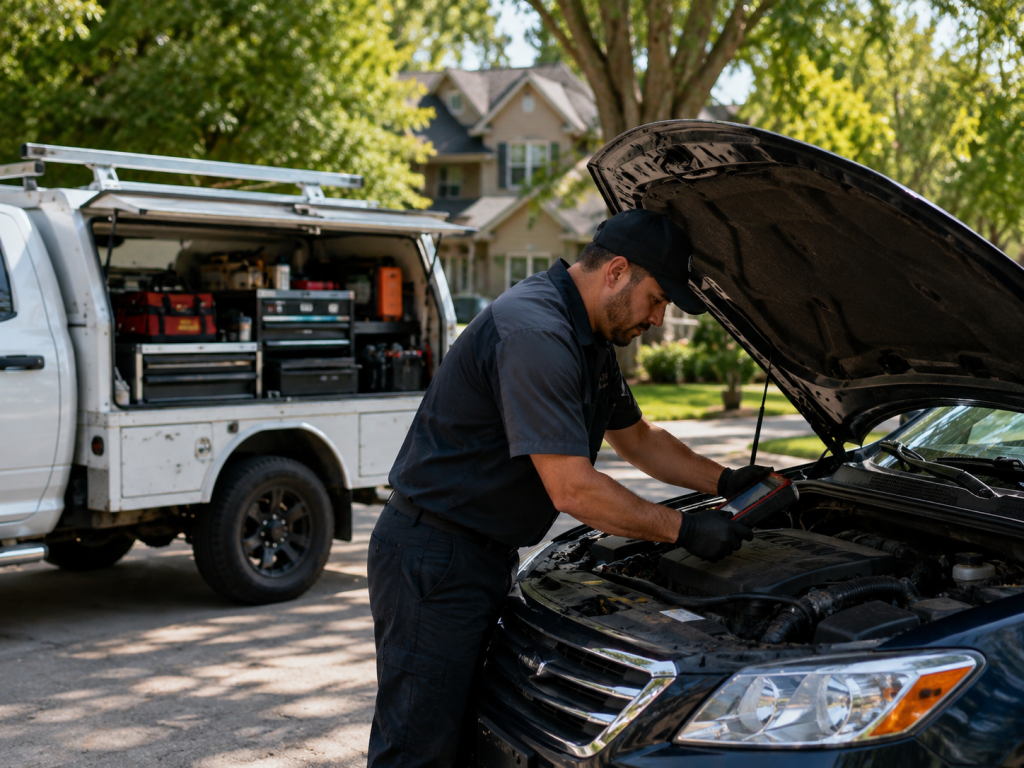
Given how quickly conditions can shift here, from a routine humid day to active storm activity, having a technician test your battery and check tire condition proactively at your home or workplace is often more practical than waiting for a scheduled shop appointment that might not align with an approaching storm threat. A mobile mechanic can address both priorities in a single visit without requiring you to navigate deteriorating conditions to reach a shop.
We covered the broader advantages of this approach in our article on why mobile mechanics are better than traditional auto shops in Tallahassee, which explains how convenience and quick response times come together, particularly valuable during a season when storm activity can develop with limited notice.
Stay Ahead Of Tallahassee’s Humidity And Storm Season
Tallahassee’s humidity and storm season are both simply part of life here, and while neither can be avoided, staying ahead of how they affect your battery and tires is well within your control. Testing these systems proactively rather than waiting for a sudden failure is one of the most effective ways to keep your car reliable throughout the year, no matter how the next storm season decides to unfold.
If it has been a while since your vehicle had a proper checkup, visit our homepage to learn more about our services, or reach out through our contact us page to schedule a visit at your home or office anywhere in the Tallahassee area.
A little proactive attention now can help your battery and tires hold up against everything Tallahassee’s humidity and storm season are about to bring, keeping you on the road rather than sidelined right when reliable transportation matters most.