
In Tallahassee, a working air conditioner is not a luxury. Long, humid summers turn a parked car into an oven, and a weak AC can make every drive miserable. Most AC problems do not appear overnight. They build slowly, with air that is a little less cold, airflow that is a little weaker, or a faint smell that gets stronger. The good news is that a few simple habits can help your system run better and last longer, and catching small problems early can keep them from turning into big ones. This guide covers how car air conditioning works, easy habits that keep it cold, warning signs to watch for, and when to call for car AC repair in Tallahassee.
How Your Car’s Air Conditioning Works
An automotive AC system does not create cold. It moves heat out of the cabin. A refrigerant circulates through a closed loop. The compressor, driven by the engine, pressurizes the refrigerant, which then flows to the condenser at the front of the car. There it releases heat to the outside air, helped by airflow and the cooling fan. The refrigerant then passes through an expansion device and into the evaporator behind the dash, where it absorbs heat from the cabin air blowing across it. The cooled air goes out through your vents, and the cycle repeats. Because the system is sealed, it should not lose refrigerant under normal conditions, so if it runs low, there is a leak somewhere.
Why Florida Heat and Humidity Are So Hard on AC
Your AC has to remove both heat and moisture, and humid air makes that job harder. In extreme heat, the system runs at full effort for long stretches, and every component takes a beating. A car left in the sun can reach very high interior temperatures, so the system starts with a heavy load each time you get in. Add stop and go traffic, where airflow across the condenser is low, and the system works even harder. Our article on humidity, storms, and what Tallahassee drivers should watch for explains how local conditions affect many parts of your vehicle, and the AC is one of the first places you notice it.
Habit One: Cool the Car Down Smartly
When you get into a hot car, open the windows or doors for a short time to let the hottest air escape before you turn the AC on. Then start the air conditioning with the fan on a moderate setting, and close the windows once the air starts to cool. Many people find that the recirculation setting helps the cabin cool faster once the hottest air is out, since the system cools air again that is already partly cooled instead of pulling in hot outside air. Switch back to fresh air from time to time, so the cabin does not get stuffy, and to help reduce window fogging.
Habit Two: Park in Shade and Use a Sunshade
The less heat the car absorbs while parked, the less work the AC has to do. Park in a garage, under a tree, or in the shade when you can. A reflective sunshade in the windshield helps reduce the interior temperature, and window tint, where legal, can cut heat as well. A cooler cabin at the start means the system reaches a comfortable temperature faster and with less strain.
Habit Three: Run the AC Regularly, Even in Cooler Weather
Air conditioning systems depend on refrigerant carrying a small amount of oil that lubricates the seals and the compressor. When the system sits unused for long periods, seals can dry out and start to leak. Running the AC for a little while on a regular basis helps keep things lubricated. Many vehicles also run the compressor when the defroster is on, which helps. If your car has been sitting, run the system for a few minutes and watch how it behaves.
Habit Four: Keep the Cabin Air Filter Fresh
The cabin air filter cleans the air that comes through your vents. When it gets clogged with dust, pollen, leaves, and debris, airflow drops, the AC feels weaker than it is, and musty smells can develop. Replace the filter according to your owner’s manual, and more often if you drive in dusty conditions or notice weak airflow. In many cars, it is an easy part to check and replace, and it is a good first thing to look at if the air does not seem to blow as strongly as it used to.
Habit Five: Keep the Condenser and Radiator Clear
The condenser sits at the front of the car, usually in front of the radiator, and it has to shed heat to the outside air. Bugs, leaves, dirt, and road debris can block its fins and reduce its ability to do that. Look through the grille now and then for buildup, and rinse the front of the car gently with water when you wash it. Do not use high pressure water directly on the fins, since they bend easily. If the fins are heavily bent or clogged, have a technician take a look.
Habit Six: Watch the Cooling System Too
The AC and the engine cooling system share the same front end airflow and the same fans. If the engine tends to run hot, the AC often suffers too. Problems such as a weak cooling fan, a clogged radiator, or low coolant can reduce AC performance, especially in traffic. If your AC gets warmer when you slow down or stop and cools again at speed, a fan problem is a likely suspect. Keep up with your cooling system maintenance, and follow the schedule in your owner’s manual.
Habit Seven: Do Not Ignore Small Changes
An AC problem rarely fixes itself. A small refrigerant leak, a worn belt, or a failing sensor tends to get worse with heavy use. Notice how your system normally behaves, how cold it gets, how loud it is, and how it smells, so you can spot a change early. Fixing a minor issue promptly can prevent damage to more expensive parts such as the compressor.
Warning Signs Your AC Needs Attention
- Air that is not as cold as it used to be
- Cooling that fades at idle or in traffic
- Weak airflow, even on the highest fan setting
- A musty, moldy, or sour smell from the vents
- Strange noises such as grinding, rattling, squealing, or clicking when the AC is on
- Moisture or water inside the car, such as damp carpet
- Air that cycles between cold and warm
- Visible oily residue on AC lines or fittings
- A belt that squeals when the AC turns on
- The AC button light is on, but no cooling occurs
Common Causes of a Weak AC
Low Refrigerant From a Leak
Refrigerant does not get used up. If the level is low, it leaked out through a hose, a seal, the condenser, or another part. Adding refrigerant without finding the leak is a short term fix at best, since it will escape again. A proper diagnosis finds the leak and fixes it.
A Failing Compressor or Clutch
The compressor is the heart of the system. If it wears out, or its clutch fails to engage, the system cannot circulate refrigerant. Noises from the compressor, a clutch that does not click on, or no cooling at all may point to this. Because a failure can send debris through the system, it is best to deal with it promptly.
A Clogged or Damaged Condenser
Debris, bent fins, or internal blockage can keep the condenser from shedding heat, and a damaged one can leak. This is more common than many people think, since the condenser sits at the very front of the car.
Cooling Fan Problems
When the fan does not run properly, the AC cools poorly at idle and in traffic. The fix might be the fan motor, a relay, a fuse, or a sensor.
Electrical Issues
Blown fuses, bad relays, failing pressure switches, and faulty controls can all stop the AC from working or make it cut in and out. A technician can test the circuit to find the fault.
A Blend Door or Control Problem
Inside the dash, small doors direct air across the heater or the evaporator. If one sticks or its actuator fails, you may get warm air on one side, or cold air that will not change. You may hear clicking from behind the dash.
A Clogged Cabin Filter or Evaporator Drain
A dirty filter reduces airflow, and a blocked drain can let water back up and leak into the cabin. Both are simple to check, and both are common in humid climates.
A Quick Note on Weak AC and a Weak Battery
The AC puts extra load on the engine and the electrical system, and a weak battery or charging system can show up when the AC is running. Dimming lights, a rough idle, or a hard start after running the AC are worth noting. If your car does not start, our guide to the top 10 reasons your car won’t start and how to get back on the road covers the common causes.
What About DIY Refrigerant Kits?
Store bought recharge kits are tempting, but they come with risks. Refrigerant is under pressure, handling it needs care, and overcharging can damage the system as much as undercharging. Because a low charge means there is a leak, a recharge may not last. Regulations also apply to handling refrigerants. If your system is not cooling, a professional diagnosis is a better first step than a can from the shelf.
What an AC Inspection Usually Covers
- Asking about the symptoms and when they happen
- Checking the air temperature at the vents
- Inspecting the belt, compressor, and clutch
- Looking at the condenser, lines, and fittings for damage or leaks
- Checking the cooling fans
- Testing system pressures
- Looking for leaks, sometimes using dye or a detector
- Checking the cabin air filter and airflow
- Testing the electrical controls
Can a Mobile Mechanic Fix Your Car AC?
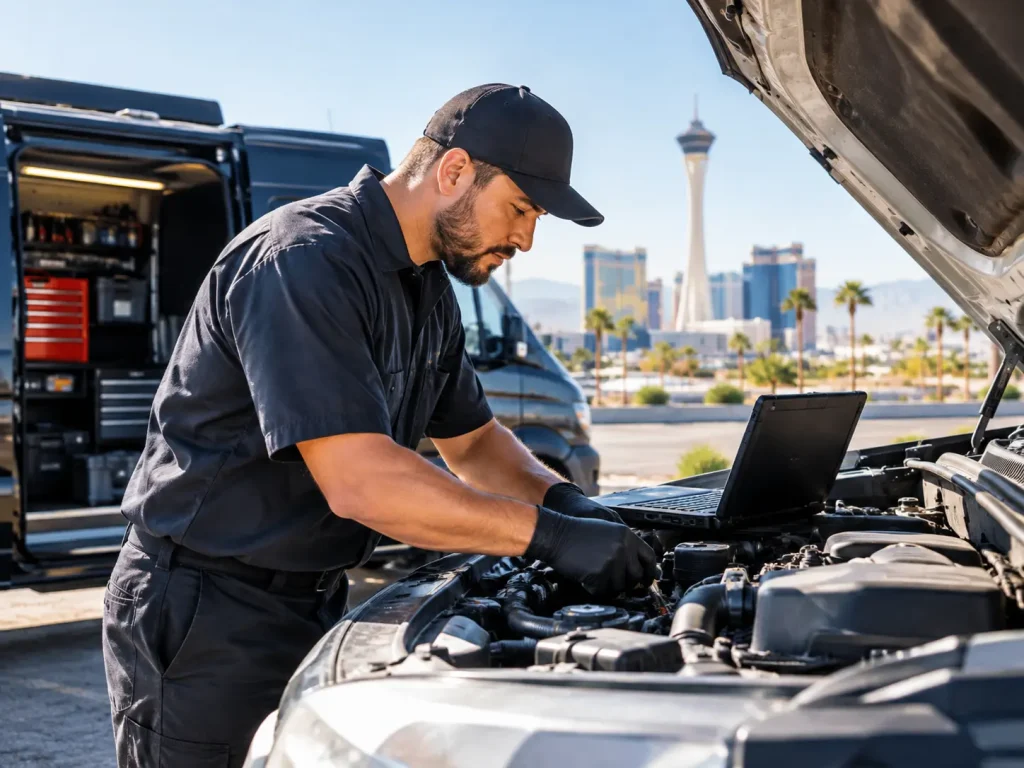
In many cases, yes. A mobile mechanic can come to your home or workplace in the Tallahassee area, check how the system is performing, look for obvious problems such as a worn belt, a clogged filter, or a fan that is not running, and handle many common AC repairs on site. That saves you from sitting in a hot waiting room. Some jobs, such as work that needs special recovery equipment, major component replacement, or repairs that need a lift or specialized tools, may need a full shop, and a trustworthy technician will tell you honestly when that is the case. When you book, share your vehicle’s year, make, model, and mileage, and describe what the AC has been doing, so the right parts and tools are on hand.
Stay Cool All Summer
A few simple habits go a long way toward keeping your AC cold through a Florida summer. Cool the cabin smartly, park in the shade, run the system regularly, keep the filter and condenser clean, and pay attention to changes. When something does seem off, an early check is usually simpler than waiting for a full failure on the hottest day of the year.
To learn more about our services, visit our homepage. If you would like your AC checked, reach out through our contact us page and we will come to you anywhere in the Tallahassee area.